

Short answer: for most people, vitamin C supplements do not cause acne. However, in certain contexts such as high doses, specific formulations, or individual skin sensitivity they can indirectly contribute to breakouts.
Vitamin C is widely praised for its antioxidant properties, immune support, and role in collagen synthesis. Yet, many people report new pimples shortly after starting supplementation. Coincidence, purge, or real cause-and-effect? Let’s clarify what science and dermatological practice actually suggest.
Key takeaways:
- Vitamin C itself is not comedogenic.
- Breakouts are more often linked to dose, form, or additives.
- Some skin types may react temporarily during adaptation.
Understanding whether vitamin C can worsen acne requires separating the nutrient itself from how it is consumed, how much, and by whom. Acne is a multifactorial condition influenced by hormones, inflammation, gut health, and skin barrier integrity. Supplements may interact with these factors in subtle ways.
What Vitamin C Does in the Body and Skin
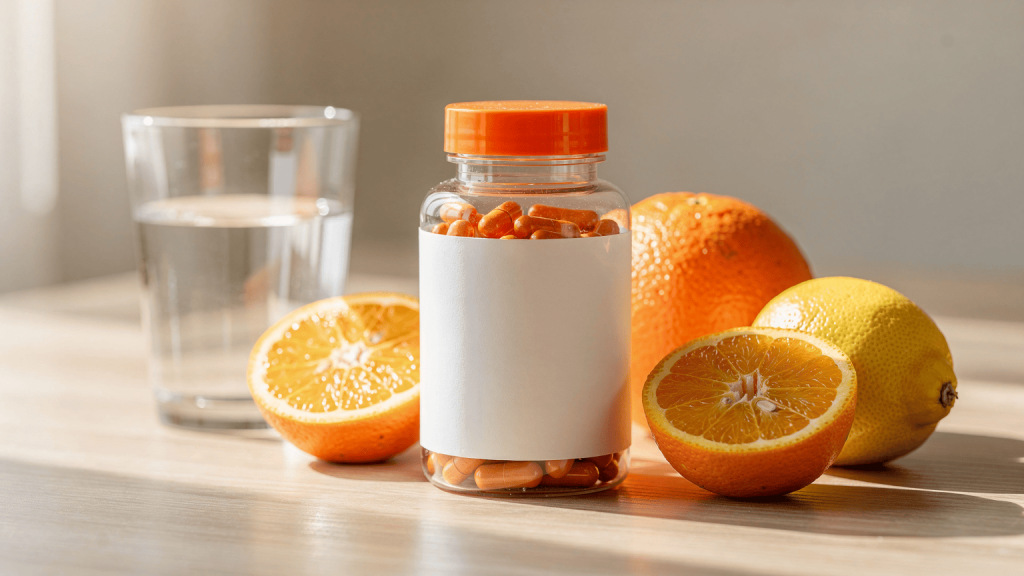
Vitamin C (ascorbic acid) plays a crucial role in immune defense, collagen production, and oxidative stress reduction. From a dermatological perspective, it is often associated with:
- Improved skin healing
- Reduced inflammation
- Enhanced barrier function
- Protection against free radicals
In theory, these effects should support clearer skin rather than worsen acne. Vitamin C also helps regulate inflammatory responses, which are central to acne development.
So why do some people experience breakouts after starting a supplement?
The explanation usually lies not in vitamin C itself, but in how the supplement interacts with the individual’s metabolism, digestion, or hormonal balance.
When Vitamin C Supplements May Trigger Breakouts
Vitamin C supplements can sometimes be associated with acne-like reactions under specific conditions.
High doses and skin stress
Very high daily intakes especially above what the body needs can temporarily increase oxidative byproducts during metabolism. In sensitive individuals, this may translate into mild inflammatory responses, including skin flare-ups.
This does not mean vitamin C is harmful, but that more is not always better, particularly for acne-prone skin.
Additives and formulation issues
Some vitamin C supplements contain:
- Artificial sweeteners
- Coloring agents
- Fillers or binders
- Sugars or flavorings
These ingredients may affect gut balance or insulin response, both of which are linked to acne severity.
Digestive tolerance matters
Poorly tolerated forms of vitamin C can cause digestive discomfort. Since the gut–skin axis plays a significant role in acne, digestive stress may indirectly reflect on the skin.
Key data : Vitamin C is water-soluble, meaning excess amounts are excreted—but digestive overload can still trigger inflammatory signals in acne-prone individuals.
Which Forms of Vitamin C Are More Likely to Affect Acne?
Not all vitamin C supplements behave the same way in the body. The form used can influence tolerance, digestion, and potential skin reactions.
Ascorbic acid vs buffered forms
Ascorbic acid is the purest and most commonly used form. While effective, it can be acidic, especially at higher doses. In acne-prone or sensitive individuals, this acidity may:
- Irritate the digestive tract
- Increase systemic stress signals
- Indirectly promote inflammatory skin responses
Buffered forms (such as calcium or magnesium ascorbate) are generally gentler on the stomach and often better tolerated by people prone to breakouts.
Time-release and blended formulas
Some supplements combine vitamin C with other nutrients or use time-release technology. These formulations can reduce digestive overload and may lower the risk of transient skin reactions.
However, blends containing sugars, artificial flavors, or unnecessary additives may negatively affect hormonal balance or the gut–skin axis, increasing the likelihood of acne flare-ups.
Does Vitamin C Cause “Purging” or Real Acne?
Unlike topical actives, oral vitamin C does not cause true skin purging. What some people experience is usually:
- A temporary inflammatory response
- A reaction to dosage or formulation
- A coincidence with existing hormonal or dietary changes
In most cases, these breakouts resolve within 1–2 weeks once the body adapts or the supplement is adjusted.
How Much Vitamin C Is Safe If You’re Acne-Prone?
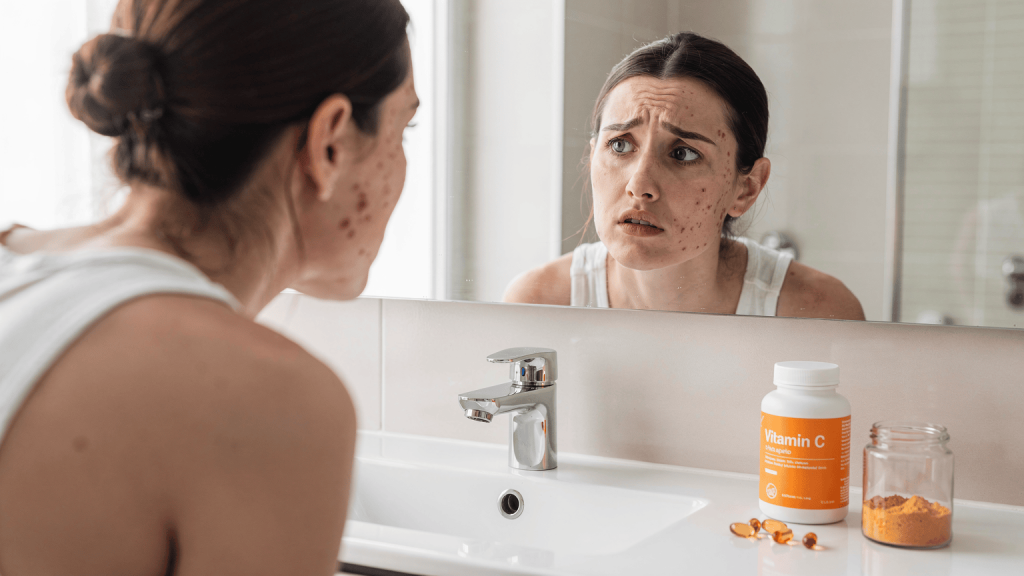
For most adults, moderate vitamin C intake is safe and beneficial, even for acne-prone skin. Problems tend to arise when dosage exceeds individual tolerance, not because vitamin C is inherently acne-causing.
Recommended intake ranges
| Intake level | Skin impact |
| 200–500 mg/day | Generally well tolerated, skin-supportive |
| 500–1,000 mg/day | Effective, low risk for most people |
| >1,500 mg/day | Higher risk of digestive stress in sensitive profiles |
A practical rule: if breakouts appear after increasing your dose, scale back rather than stop completely.
Who should be more cautious?
You may want to adjust your intake if you:
- Have active inflammatory acne
- Experience digestive sensitivity
- Combine vitamin C with multiple supplements
- Are under high hormonal or stress load
In these cases, lower doses or buffered forms are often better tolerated.
How to Reduce Acne Risk While Taking Vitamin C
Simple strategies can significantly lower the chance of breakouts:
- Take vitamin C with food
- Avoid supplements with added sugars or flavors
- Start low, then increase gradually
- Stay hydrated to support elimination pathways
Most importantly, monitor how your own skin responds, rather than following high-dose trends.
In summary
Vitamin C supplements do not directly cause acne. When breakouts appear, they are usually linked to excessive dosage, poorly tolerated forms, or individual sensitivity, rather than the vitamin itself.
For acne-prone skin, the safest approach is to:
- Use moderate doses
- Choose clean, well-tolerated formulations
- Introduce supplementation gradually
- Monitor skin and digestive responses together
When used correctly, vitamin C remains a valuable ally for skin health, supporting healing and reducing inflammation rather than worsening acne.