

Short answer: for most people, fish oil does not cause acne and may even help reduce inflammatory breakouts. However, in specific profiles, certain formulations or dosages can worsen skin congestion or trigger acne-like reactions.
Fish oil supplements are widely used for their omega-3 fatty acids, known to support heart health, joint function, and inflammation control. But when it comes to skin, especially acne-prone skin, the effects are often misunderstood. Some users report clearer skin, while others notice new breakouts shortly after starting supplementation.
Understanding why fish oil might help or hurt your skin requires looking beyond simple anecdotes and focusing on dose, purity, hormonal context, and individual skin biology.
Key takeaways:
- Fish oil does not directly cause acne in most individuals.
- Omega-3s may help reduce inflammatory acne under the right conditions.
- Breakouts are more likely linked to dosage, oxidation, or individual sensitivity.
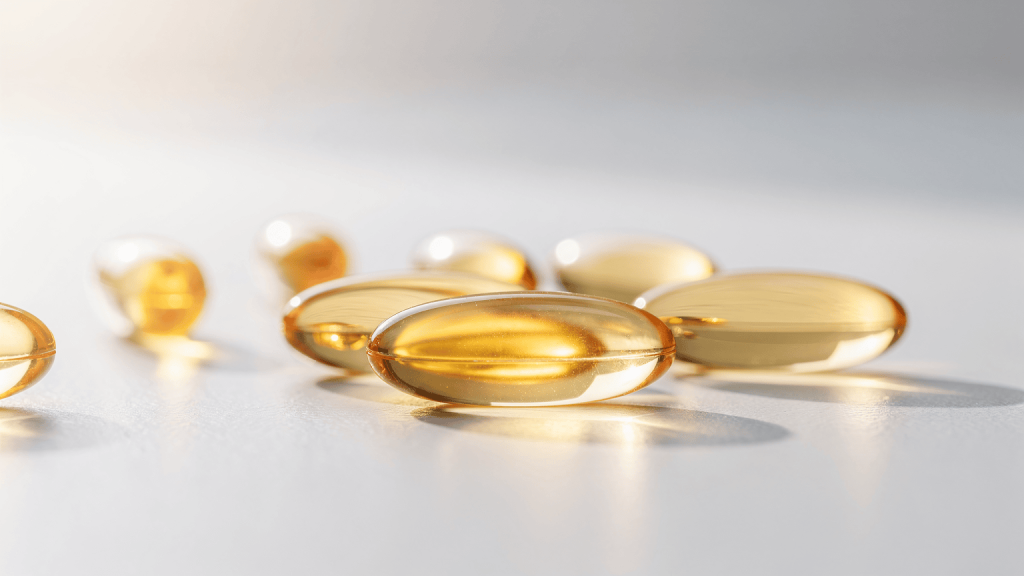
Why fish oil is often linked to acne concerns
The confusion around fish oil and acne usually comes from timing. Acne flare-ups often appear 2–4 weeks after starting a supplement, which makes fish oil an easy suspect. In reality, several indirect mechanisms may be involved.
Fish oil is rich in EPA and DHA, two omega-3 fatty acids that influence:
- Inflammatory pathways
- Insulin sensitivity
- Sebum composition
- Hormonal signaling
In theory, these effects should support clearer skin. In practice, the response depends on how your body metabolizes fats and how sensitive your skin is to internal changes.
Acne basics: inflammation, sebum, and hormones
To understand whether fish oil can trigger acne, it helps to recall what drives acne formation in the first place.
Acne develops through a combination of:
- Excess sebum production
- Clogged pores
- Inflammation
- Hormonal fluctuations, particularly androgens
Inflammatory acne, characterized by red, painful lesions, is especially sensitive to systemic inflammation and dietary fat composition. This is where omega-3 fatty acids come into play.
Unlike omega-6 fats, which tend to promote inflammation when consumed in excess, omega-3s are generally considered anti-inflammatory. This distinction explains why fish oil is often recommended in acne-support protocols.
So why do some people break out after starting fish oil?
There are several plausible explanations, none of which mean fish oil is inherently “bad” for the skin.
- Oxidized fish oil can promote oxidative stress rather than reduce it.
- High doses taken suddenly may temporarily alter sebum composition.
- Low-quality supplements may contain impurities that irritate sensitive systems.
- Hormonal acne profiles may react differently than inflammatory acne profiles.
In these cases, the issue is not omega-3 itself, but how it is consumed and processed by the body.
Key data : Omega-3 fatty acids have been shown to modulate inflammatory markers involved in acne severity, but effects vary depending on individual metabolic response.
How omega-3 fatty acids interact with acne-prone skin
Omega-3 fatty acids influence acne mainly through their anti-inflammatory action. EPA and DHA help regulate inflammatory mediators that are commonly elevated in acne, especially in inflammatory and hormonal acne profiles.
When inflammation decreases, several downstream effects may occur:
- Reduced redness and swelling of active lesions
- Improved sebum quality, making pores less prone to clogging
- Lower inflammatory response to acne-causing bacteria
This is why fish oil is sometimes associated with improved skin clarity rather than breakouts.
When omega-3s may improve acne
Fish oil supplementation appears more beneficial when acne is driven by:
- Chronic low-grade inflammation
- High omega-6 intake from processed foods
- Stress-related breakouts
- Insulin sensitivity issues
In these cases, omega-3s can help rebalance the omega-6 to omega-3 ratio, a key factor in skin inflammation.

When results are inconsistent
Not all acne responds the same way. People with primarily comedonal acne (blackheads, whiteheads) or very reactive skin may notice little benefit at first. In rare cases, temporary breakouts may appear during the initial weeks as the body adapts to changes in lipid metabolism.
Key data : The balance between omega-6 and omega-3 fatty acids appears more important for acne outcomes than omega-3 intake alone.
Dosage and quality: why some fish oil supplements may worsen acne
When fish oil seems to trigger breakouts, the issue is rarely omega-3 itself, but rather how much is taken and the quality of the supplement.
Dosage matters more than people think
Starting with a high dose too quickly can temporarily disrupt sebum balance. This may lead to clogged pores in acne-prone individuals.
General guidance for skin-related use:
- Low to moderate intake tends to be better tolerated
- Gradual introduction allows the skin to adapt
- Excessive doses offer no added acne benefit and may increase side effects
A slow approach is often enough to avoid skin reactions.
Supplement quality is critical
Low-quality fish oil can oxidize easily. Oxidized oils promote oxidative stress, which may worsen inflammation instead of reducing it.
Key quality factors to look for:
- Freshness and proper storage
- Purification from heavy metals
- Stability against oxidation
- Clear EPA/DHA content labeling
Poor-quality products are more likely to cause digestive discomfort, skin congestion, or inflammatory responses.
Practical checklist :
- Start with a low dose and increase gradually
- Avoid fish oil with a strong rancid smell
- Store supplements away from heat and light
Final answer: can fish oil supplements cause acne?
For the vast majority of people, fish oil supplements do not cause acne. In fact, when used correctly, omega-3 fatty acids may help reduce inflammatory acne, improve skin resilience, and support overall skin health.
However, fish oil can contribute to breakouts in specific situations, including:
- Very high doses introduced too quickly
- Oxidized or low-quality supplements
- Highly reactive or congested skin types
- Individuals prone to hormonal fluctuations
In these cases, acne flare-ups are usually temporary and related to dose, formulation, or adaptation, not to omega-3 fatty acids themselves.
Who may benefit the most from fish oil?
Fish oil tends to be more helpful for people with:
- Inflammatory acne rather than purely comedonal acne
- Diets high in omega-6 fatty acids
- Acne linked to stress or systemic inflammation
Who should be cautious?
You may want to proceed carefully if you experience:
- Rapid onset breakouts after supplementation
- Digestive discomfort alongside skin changes
- Worsening congestion despite dose reduction
In these cases, stopping the supplement temporarily and reassessing quality or dosage is often sufficient.
Bottom line
Fish oil is not an acne trigger by default. Skin reactions are usually context-dependent, influenced by quality, dosage, and individual biology. Used thoughtfully, omega-3 supplements remain a valuable tool for supporting skin health rather than undermining it.