

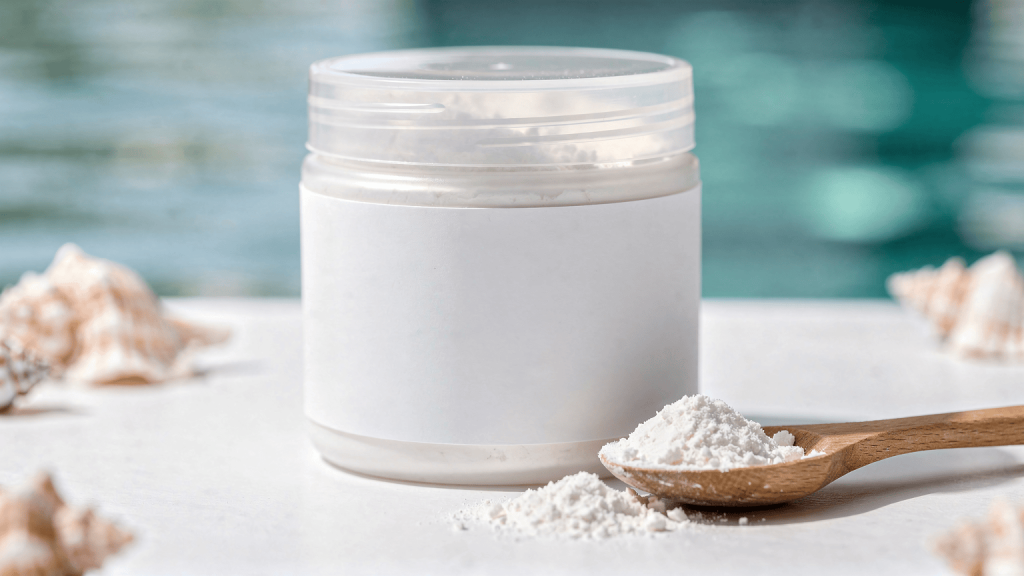
Marine collagen is a type of collagen sourced from fish, mainly from skin and scales. It is commonly consumed as a powdered supplement to support skin structure, joints, and connective tissues.
In simple terms, marine collagen provides specific amino acids that help the body maintain collagen levels as natural production declines with age.
Key takeaways:
- Marine collagen comes from fish and is highly digestible.
- It mainly provides type I collagen.
- It is commonly used for skin and joint support.
What makes marine collagen different?
Marine collagen is mostly composed of type I collagen, the dominant form found in skin, bones, and tendons. It is usually hydrolyzed into small peptides, which explains why many people ask does marine collagen work? From a nutritional standpoint, these peptides are easier to absorb than native collagen.
Another difference is its origin: marine collagen is often preferred by people avoiding land-based animal products.
Is marine collagen good for you?
The question is marine collagen good for you depends on your goals. Marine collagen is not a complete protein, but it is rich in glycine and proline, amino acids involved in tissue structure.
It may help support:
- Skin firmness and elasticity
- Joint comfort
- Connective tissue strength
What is marine collagen good for?
When people ask what is marine collagen good for, the answer is usually related to skin aging and joint health. Marine collagen is most often used to complement a balanced diet when collagen needs increase due to age, physical activity, or lifestyle factors.
Does marine collagen taste like fish?
A common concern is does marine collagen taste like fish. High-quality marine collagen is generally neutral in taste, while lower-grade products may retain a slight marine flavor.
How does marine collagen work in the body?
Once ingested, marine collagen is broken down into amino acids and small peptides during digestion. These compounds act as building blocks and signals that support the body’s natural collagen production.
This mechanism explains why many people ask does marine collagen work? Rather than becoming collagen directly, it helps the body maintain collagen-rich tissues over time.
What benefits can you realistically expect?
Marine collagen is not a miracle solution, but consistent intake may support:
- Skin elasticity and firmness
- Joint comfort and mobility
- Tendon and ligament resilience
Results are usually gradual, becoming noticeable after several weeks of regular use.
Key fact: Collagen peptides are mainly valued for their amino acid profile rather than as a complete protein source.
Who may benefit the most?
Marine collagen is commonly used by:
- Adults noticing skin aging
- Physically active individuals with joint stress
- People exposed to high oxidative or lifestyle stress
How should marine collagen be used?
Marine collagen is typically consumed once daily, mixed into water, coffee, or a smoothie. Because it is tasteless when well processed, it integrates easily into most routines.
Consistency matters more than timing. Daily intake over several weeks is generally recommended to support skin and connective tissue maintenance.

Dosage basics
Most marine collagen supplements provide 2.5 to 10 grams per serving. Lower doses are often used for skin support, while higher doses may be chosen by physically active individuals.
Taking marine collagen with vitamin C is commonly advised, as vitamin C plays a role in normal collagen synthesis.
Practical checklist:
- Take marine collagen daily
- Combine with vitamin C
- Use consistently for several weeks
Safety and tolerance
Marine collagen is generally well tolerated. Mild digestive discomfort may occur at higher intakes, especially when starting supplementation.
Individuals with fish allergies should avoid marine collagen and choose an alternative source.
Final thoughts on marine collagen
Marine collagen is a targeted nutritional supplement designed to support collagen-rich tissues as natural production declines with age. It is valued for its high bioavailability, neutral taste when well processed, and its role in skin and joint support.
When taken consistently, marine collagen may help maintain:
- Skin firmness and elasticity
- Joint comfort and mobility
- Connective tissue resilience
Marine collagen is not a complete protein and does not replace a balanced diet. Its benefits are best viewed as long-term support, especially when combined with healthy lifestyle habits and adequate vitamin C intake.
In practical terms, those wondering is marine collagen good for you or what is marine collagen good for should consider it as a complement, not a quick fix. When quality and consistency are prioritized, marine collagen can fit naturally into a daily wellness routine.